
Selenium, Thyroid Hormones, and Autoimmunity

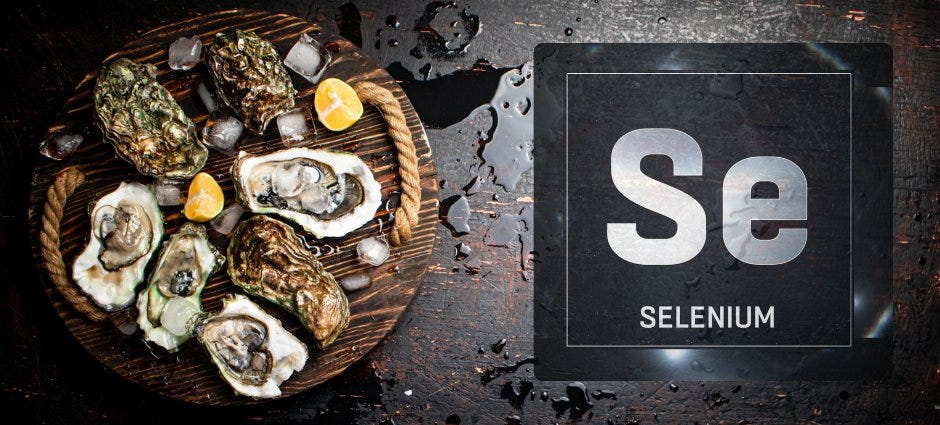
Why is selenium important?
Selenium is required for thyroid hormone conversion.
A deficiency can lead to hypothyroid symptoms, even if hypothyroidism is not diagnosed.
More importantly, selenium calms autoimmune thyroid processes, Hashimoto’s, Graves’, and thyroid eye disease, and it can accelerate the normalization of thyroid hormone levels during extreme stress.
Study 1
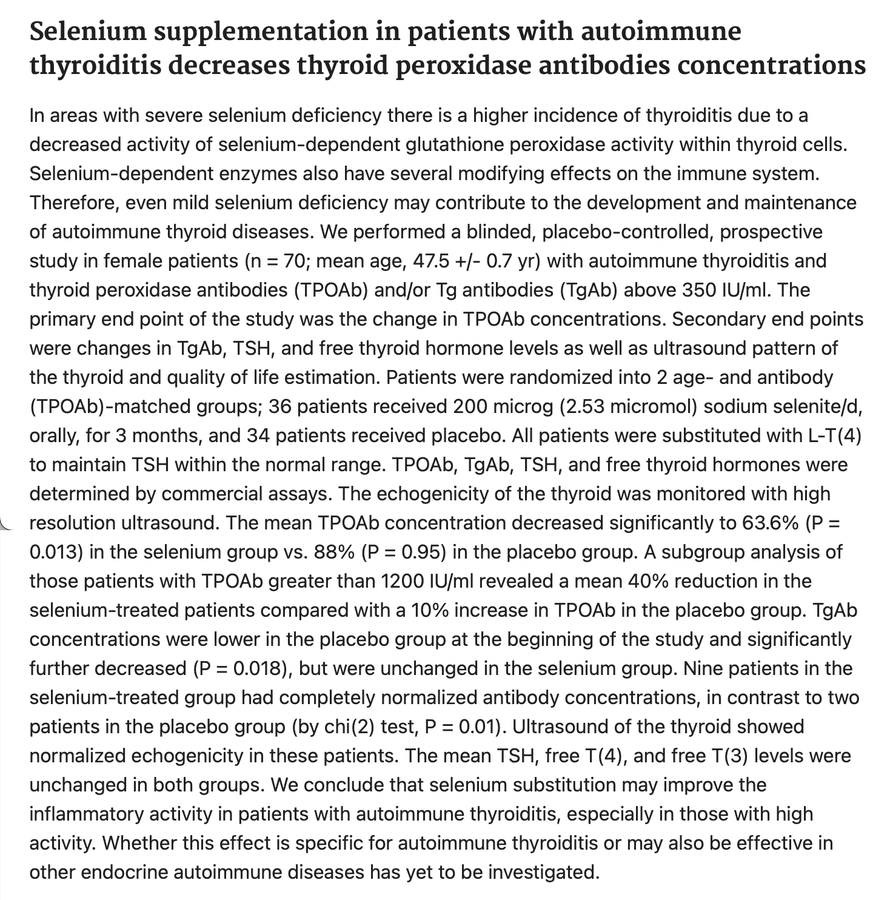
During a three-month study with 70 women with Hashimoto’s antibodies, all were dosed with T4 to maintain TSH in the normal range; half were given 200 mcg of sodium selenite (selenium) per day for three months, and the remainder were given a placebo.
At the end of the experiment, 25% of patients in the selenium group had normal antibodies, compared with 6% of the placebo group. Thyroid ultrasound confirmed normal gland structure in those with normal antibodies.
That’s a 4x remission rate with supplementation.
The TPO antibody decreased by 34% in the selenium group, almost three times the reduction seen in the other group (12%).
TGA antibodies didn’t change in the selenium group but did decrease in the placebo group.
TSH, fT3, and fT4 (thyroid hormones) were unchanged - remember, all participants were given T4, which was dosed to “normalize” TSH.
“We conclude that selenium substitution may improve the inflammatory activity in patients with autoimmune thyroiditis, especially in those with high activity. Whether this effect is specific for autoimmune thyroiditis or may also be effective in other endocrine autoimmune diseases has yet to be investigated.”
Study 2
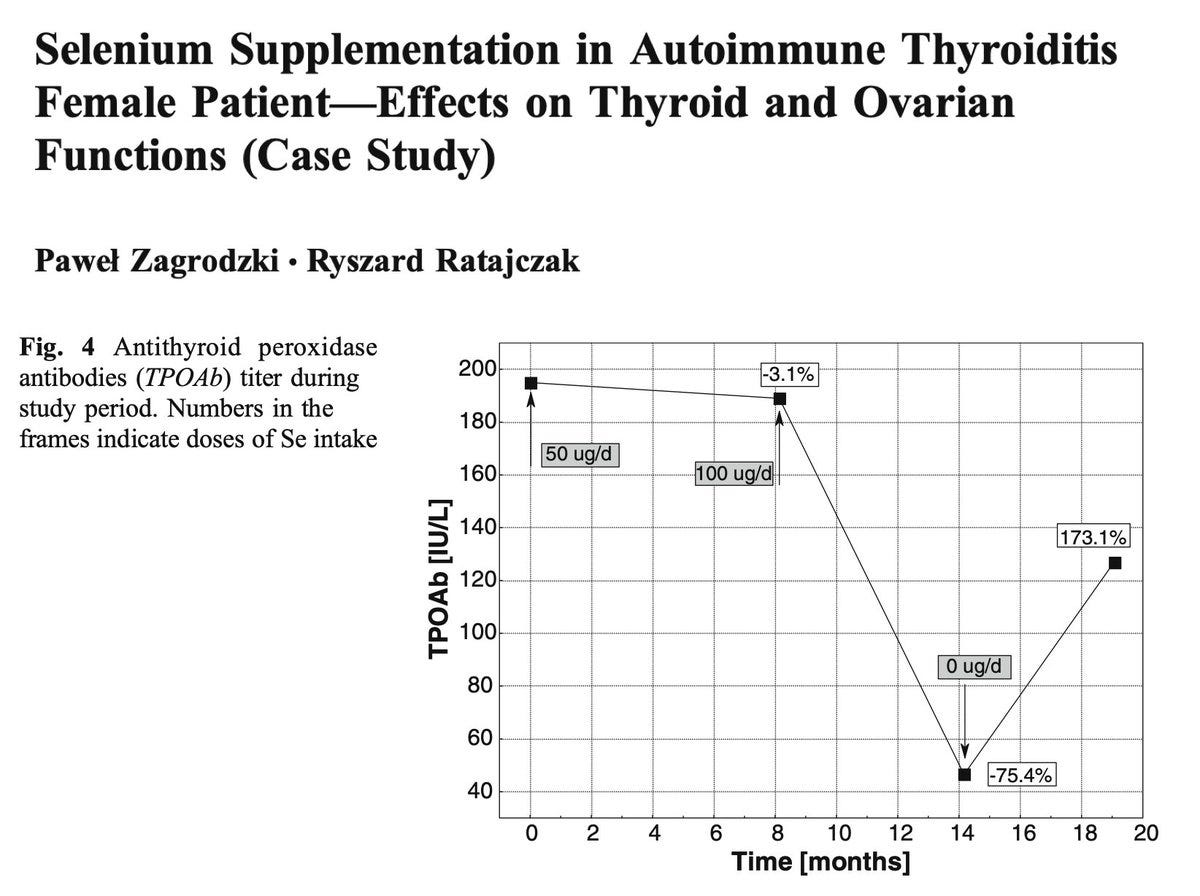
In a case study, one woman with Hashimoto’s was given 50-100 mcg of supplemental selenium per day for 14 months.
50 mcg had little effect, but 100 mcg was effective. At that dose, TPO antibodies decreased by 76%.
Then, supplementation was stopped, and the woman was tested over the next five months... her TPO antibodies increased.
“After withdrawal of the supplementation, the sharp fall of Se and GPX3 promptly occurred, and this phenomenon was accompanied with a marked increase in TPOAb.”
Study 3
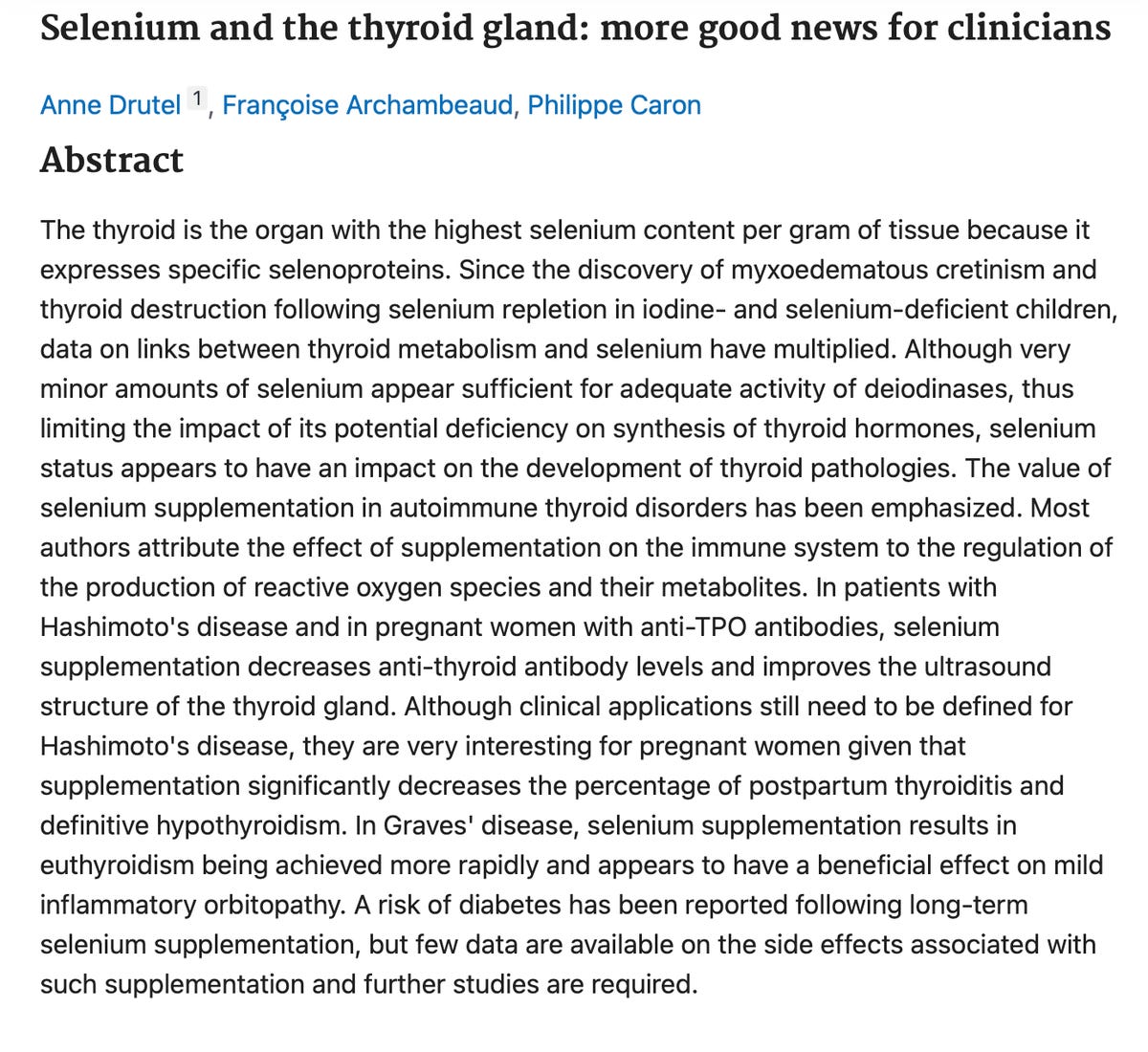
Though selenium is needed for thyroid hormone conversion, most of its benefits in thyroid disease likely stem from its immune-modulating properties and effects on ROS in the thyroid gland. It is noted to even reduce the likelihood of postpartum thyroiditis/Hashimoto’s.
“Most authors attribute the effect of supplementation on the immune system to the regulation of the production of reactive oxygen species and their metabolites. In patients with Hashimoto’s disease and in pregnant women with anti-TPO antibodies, selenium supplementation decreases anti-thyroid antibody levels and improves the ultrasound structure of the thyroid gland. Although clinical applications still need to be defined for Hashimoto’s disease, they are very interesting for pregnant women given that supplementation significantly decreases the percentage of postpartum thyroiditis and definitive hypothyroidism.”
Study 4
Selenium may help with autoimmune hyperthyroidism, too.
Patients given a combination of antioxidants, including selenium, achieve normal thyroid hormone levels more rapidly than those who were not. Both groups were also taking anti-thyroid medication.
Normal thyroid status in Graves’ patients is correlated with blood selenium levels.
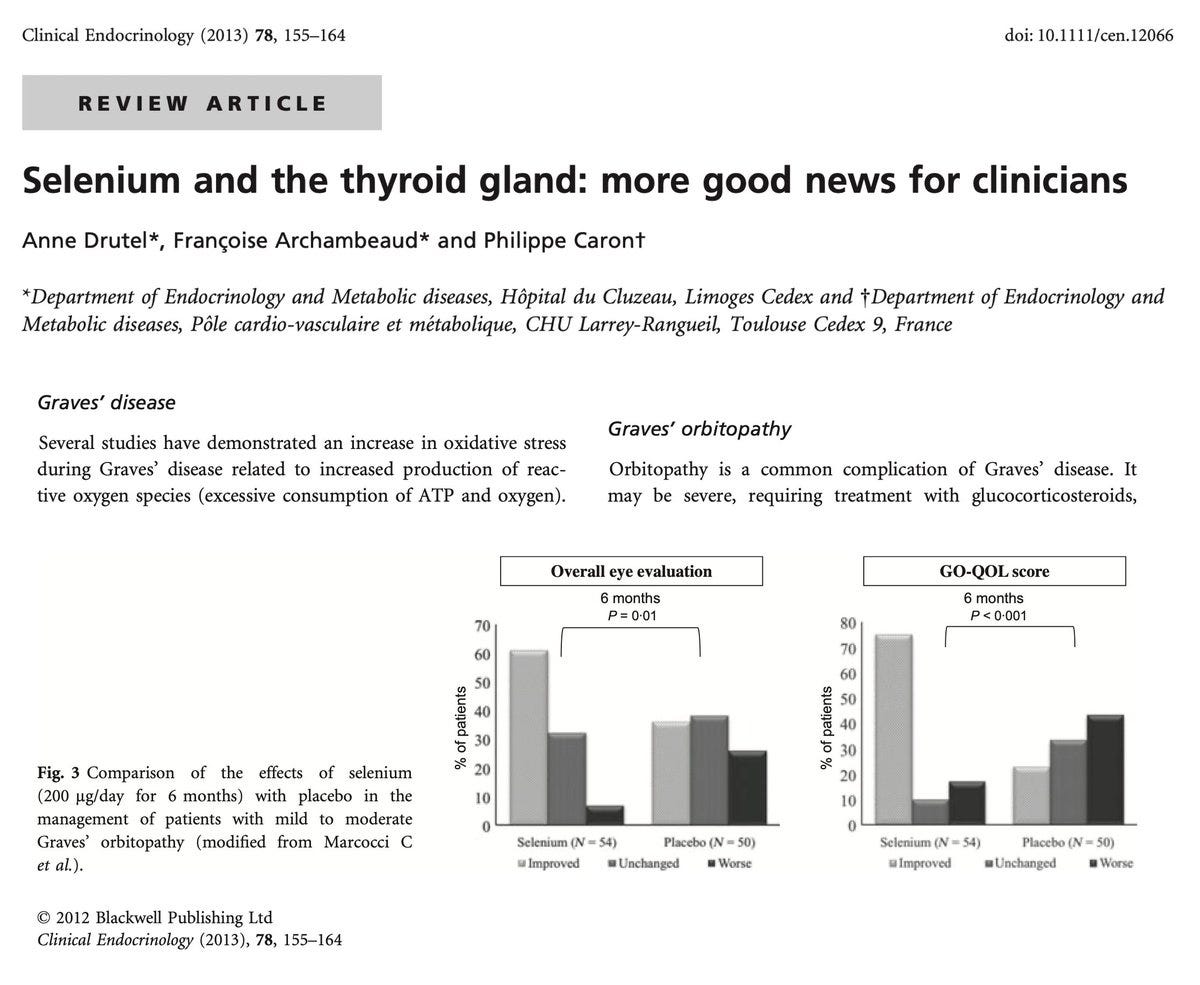
Patients with Graves’ orbitopathy (thyroid eye disease) fare better when given selenium (sodium selenite, 200 μg/day).
“More than 70% of patients treated with selenium reported an improvement in quality of life vs 22% of patients receiving placebo. Orbital lesions were improved in 61% of patients receiving selenium vs 35% of patients treated with placebo. They worsened in 7% of patients treated with selenium vs 26% of patients receiving placebo.”
Study 5
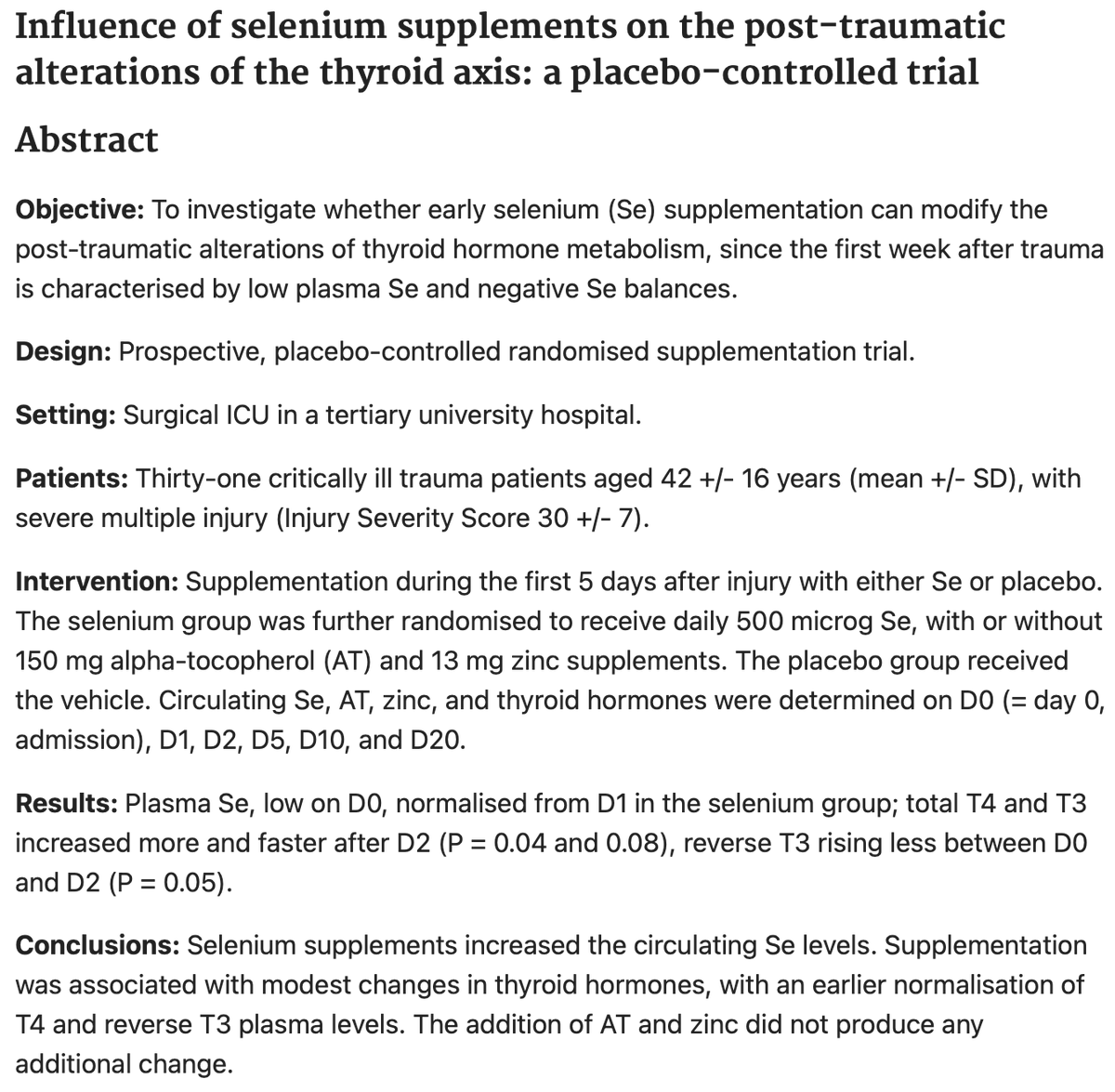
Supplementing selenium (500 mcg/day) during acute stress (in this case, during a stay in the surgical ICU) accelerates the recovery of normal thyroid hormone levels, both T4 and T3.
Study 6
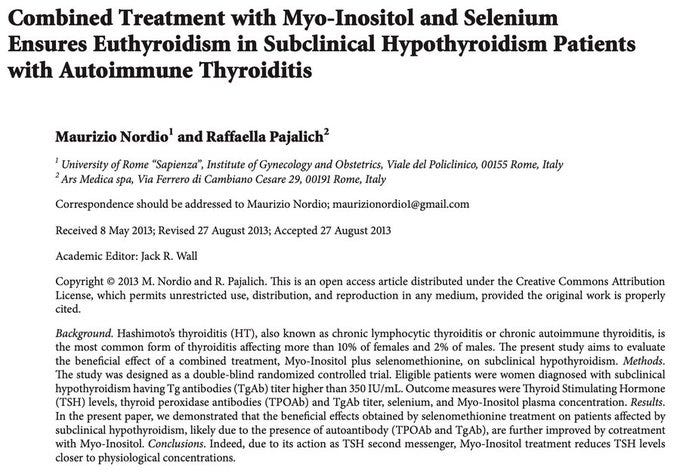
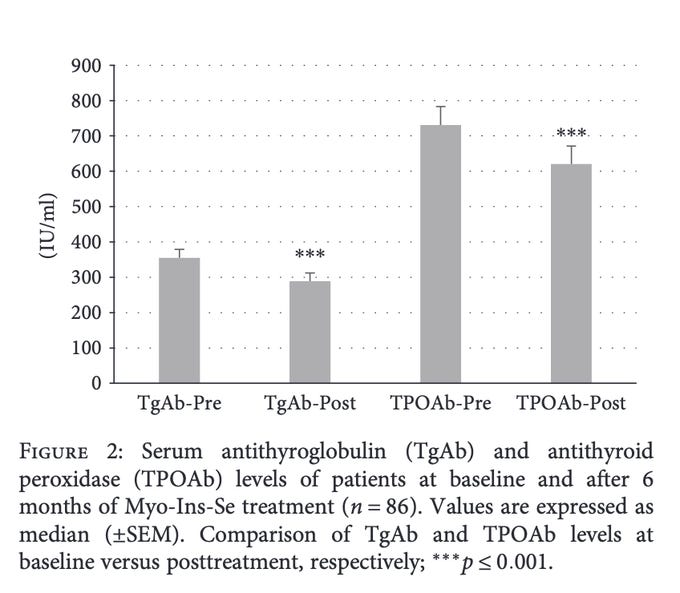
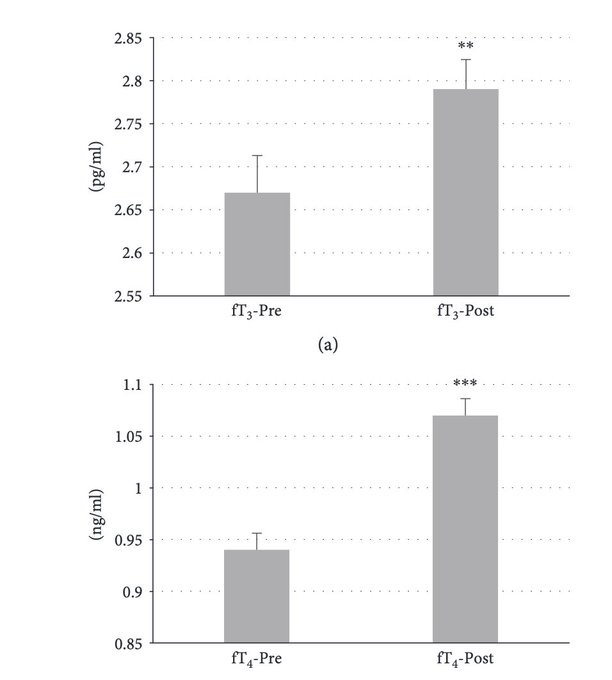
Combining selenium and myo-inositol reduces thyroid antibodies, lowers TSH, and increases thyroid hormones in people with hypothyroidism.
The combination also increased TSH in a hyperthyroid patient - it seems to normalize rather than simply increase thyroid function.
Selenium and Myo-inositol are important for thyroid hormone synthesis, and low levels may predispose to the development of hypothyroidism. People with hypothyroidism have a higher demand for myo-inositol.
Study 1:
“In the present study, we were able to demonstrate that, in subclinical hypothyroidism, patients with autoimmune thyroiditis, treated with Myo-Inositol and selenomethionine, experience a reduction of the increased TSH that selenomethionine supplementation alone was not able to promote. Concomitantly, the concentration of the two autoantibodies declined in both groups.”
Study 2:
“TSH, TPOAb, and TgAb antibody levels were significantly decreased in patients treated... a significant fT3, and fT4, increase, along with an amelioration of their quality of life, was observed. Remarkably, TSH values of the hyperthyroid patient increased from 0.14U/ml up to 1.02U/ml, showing a complete restoration of TSH values at a normal range.”
The amount of these nutrients used in the study is easily achieved through diet, too.
There is 83 μg of selenium in:
2 oz oysters, or
3 large eggs, or
10 oz mushrooms
There is 600 mg of myo-inositol in:
12 oz cantaloupe, or
15 oz orange, or
30 oz mandarin
Thanks for reading!
If you want to learn more about hypothyroidism, then check out my Hypothyroid Masterclass.
The course teaches practical testing, nutrition, and dosing concepts - with a support community. On-demand video modules:
➤ What is Hypothyroidism?
➤ Hypothyroid Symptoms
➤ Causes of Hypothyroidism
➤ Thyroid, Energy, and Health
➤ Diseases Caused by Low Thyroid Hormones
➤ Euthyroid Sick Syndrome
➤ Problems Caused by High TSH
➤ The Thyroid System
➤ Thyroid Blood Tests
➤ The Problems with Blood Tests
➤ Pulse and Temperature
➤ Testing T3 Activity
➤ Thyroid Autoimmunity
➤ Thyroid Hormone Conversion
➤ Reverse T3
➤ Thyroid Hormone Transport
➤ Supplementing T4
➤ Supplementing NDT or T4+T3
➤ Supplementing T3 Only
➤ Tracking Nutrition
➤ Iron
➤ Iodine and Selenium
➤ Calories
➤ Macronutrients
➤ PUFA and FFA
➤ Pro-thyroid Substances
➤ Stress
➤ A Pro-thyroid Diet
➤ Thyroid Threats
➤ Drugs That Affect Thyroid Hormones