
The Thyroid System

Low metabolism, fat gain, chronic disease?
It could be thyroid hormone deficiency.
There is a whole-body system for delivering thyroid hormone to cells.
A failure of any part causes hypothyroid symptoms - often resistant to standard treatment.
Here's how that system works.
Hypothyroid course and community LINK!
The Hypothalamus
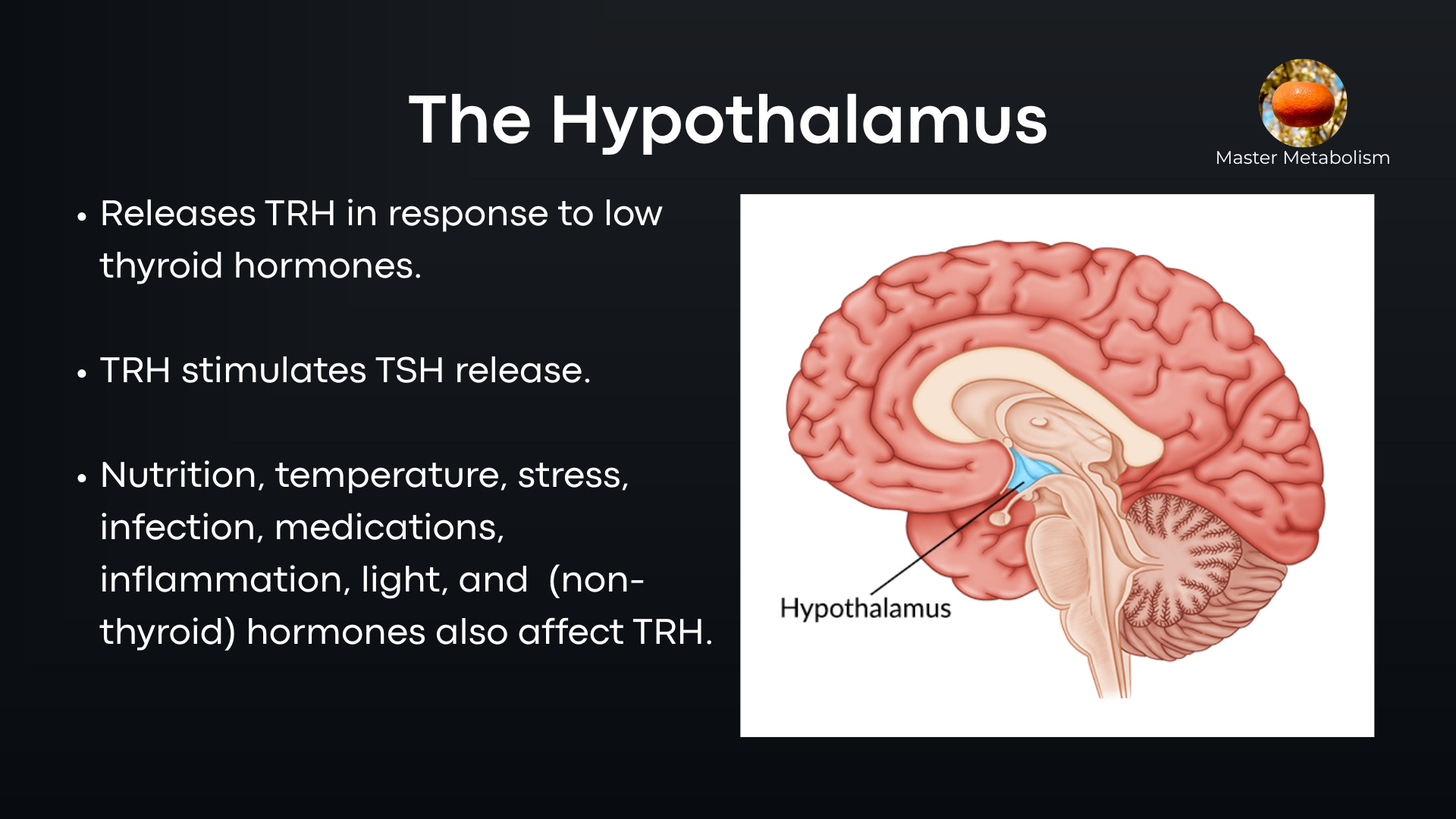
The hypothalamus releases TRH.
TRH stimulates the pituitary gland to release TSH.
TSH is what tells the thyroid to create and release thyroid hormones.
Any problem with the hypothalamus and any other factors that affect TRH output can lead to low thyroid hormone production.
The Pituitary
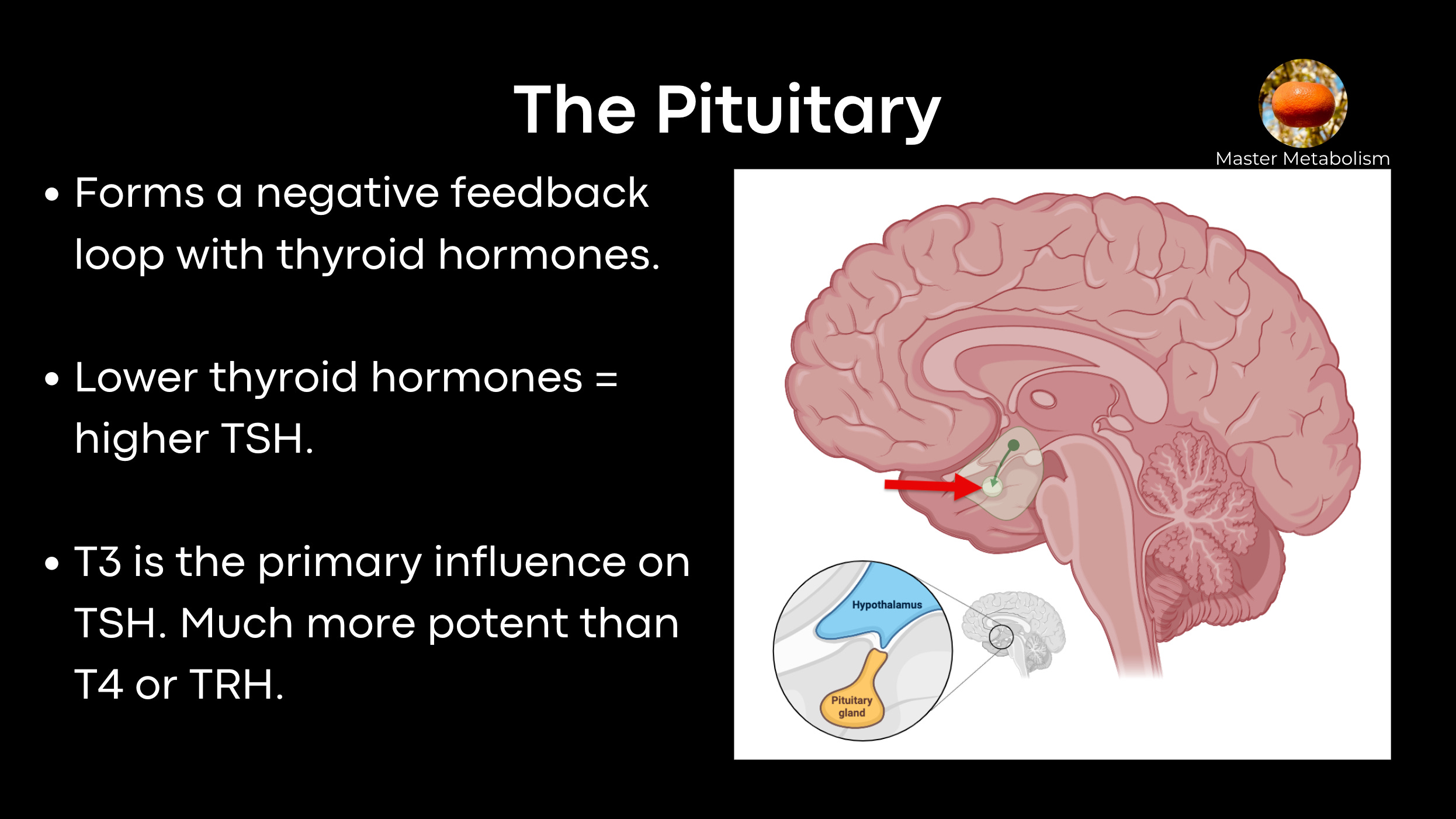
The pituitary gland releases TSH.
TSH release is stimulated by TRH and thyroid hormones in the pituitary.
TSH triggers the release of thyroid hormones from the thyroid.
Low thyroid hormones increase TSH - and vice versa.
A problem here shows up on tests as hypothyroidism - aka primary hypothyroidism.
The Thyroid
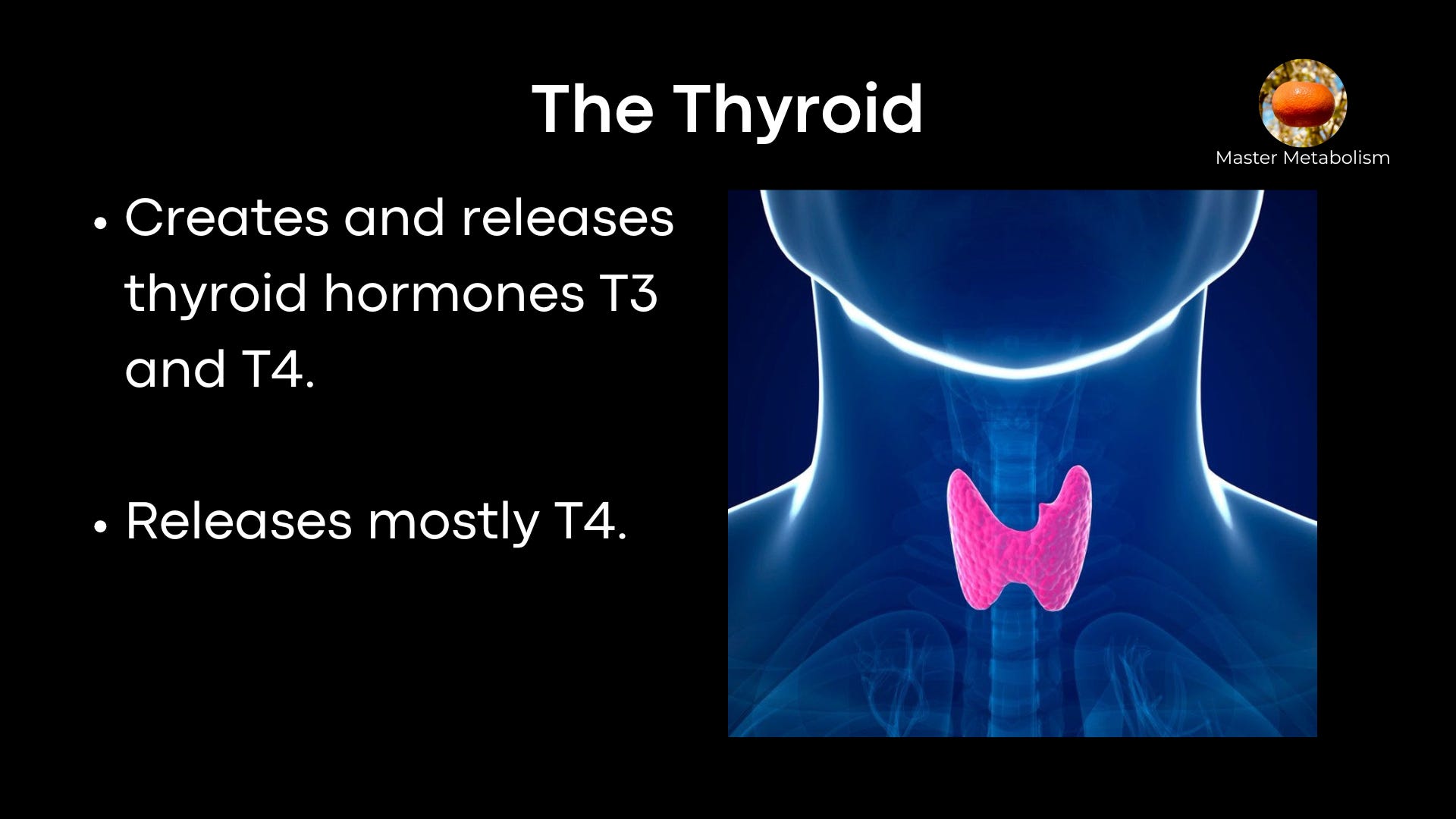
Stimulated by TSH, the thyroid gland makes and releases thyroid hormones.
But the TSH is not a perfect measure of thyroid hormone levels.
TSH DROPS in stress and illness.
TSH can be low while thyroid hormone (T3) levels are also low!
So, the idea that low thyroid activity is always identified by high TSH is WRONG.
T3 activation of cells is what matters.
Thyroid Hormone Conversion
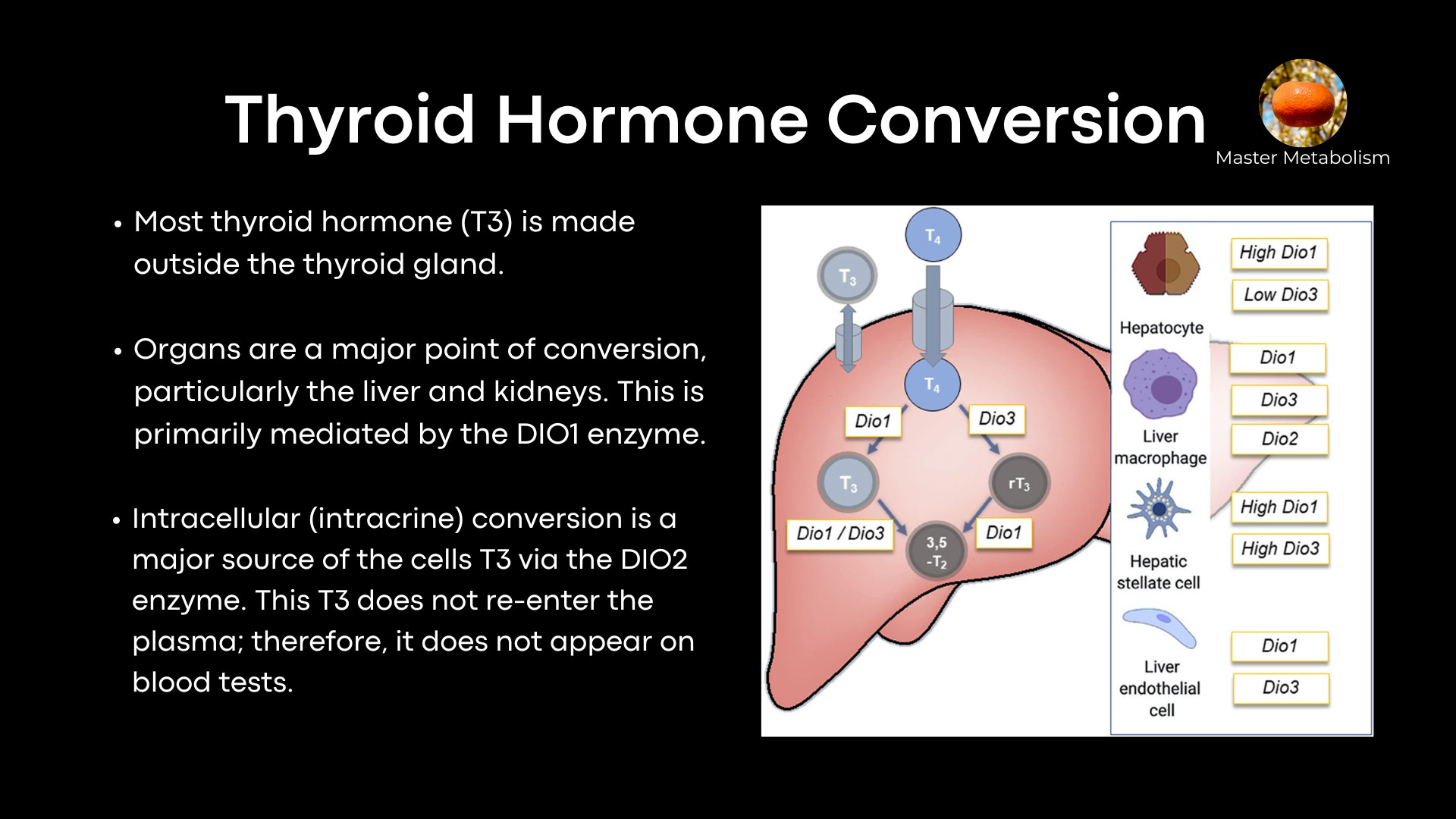
There are two thyroid hormones: T3 and T4.
But T3 is THE thyroid hormone.
Low T3 activity in cells is THE cause of hypothyroid symptoms.
T4 is converted to T3 throughout the body.
T4 does not reduce hypothyroid symptoms unless it is first converted into T3.
T3 is King - conversion is essential.
Transport In The Blood
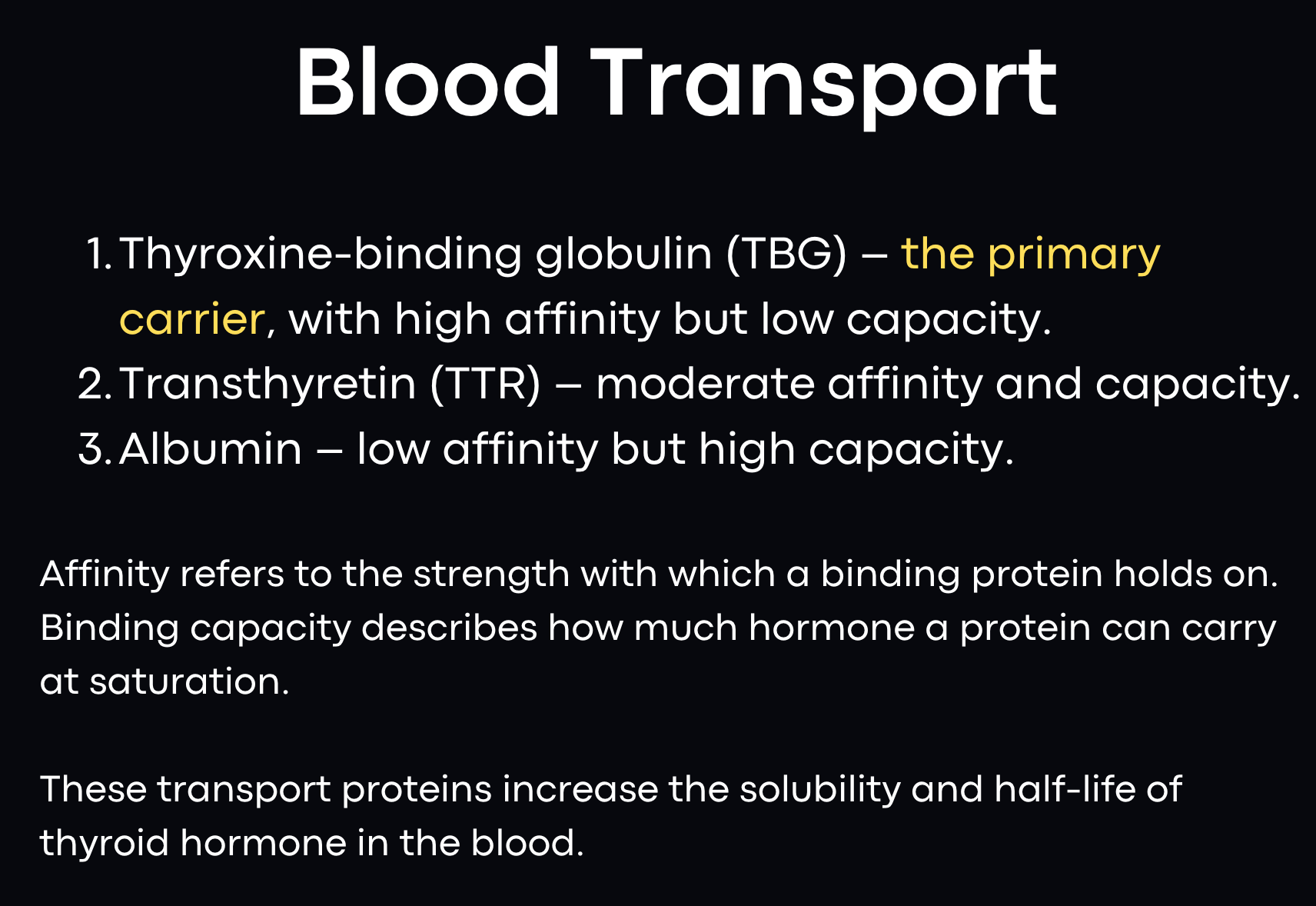
Thyroid hormones are transported in blood by TBG, TTR, and albumin.
Binding to these proteins affects the "free" and "total" levels.
Free hormones are more biologically active.
These proteins help stabilize thyroid hormone levels and increase their half-life and solubility in the blood.
Intracellular Conversion
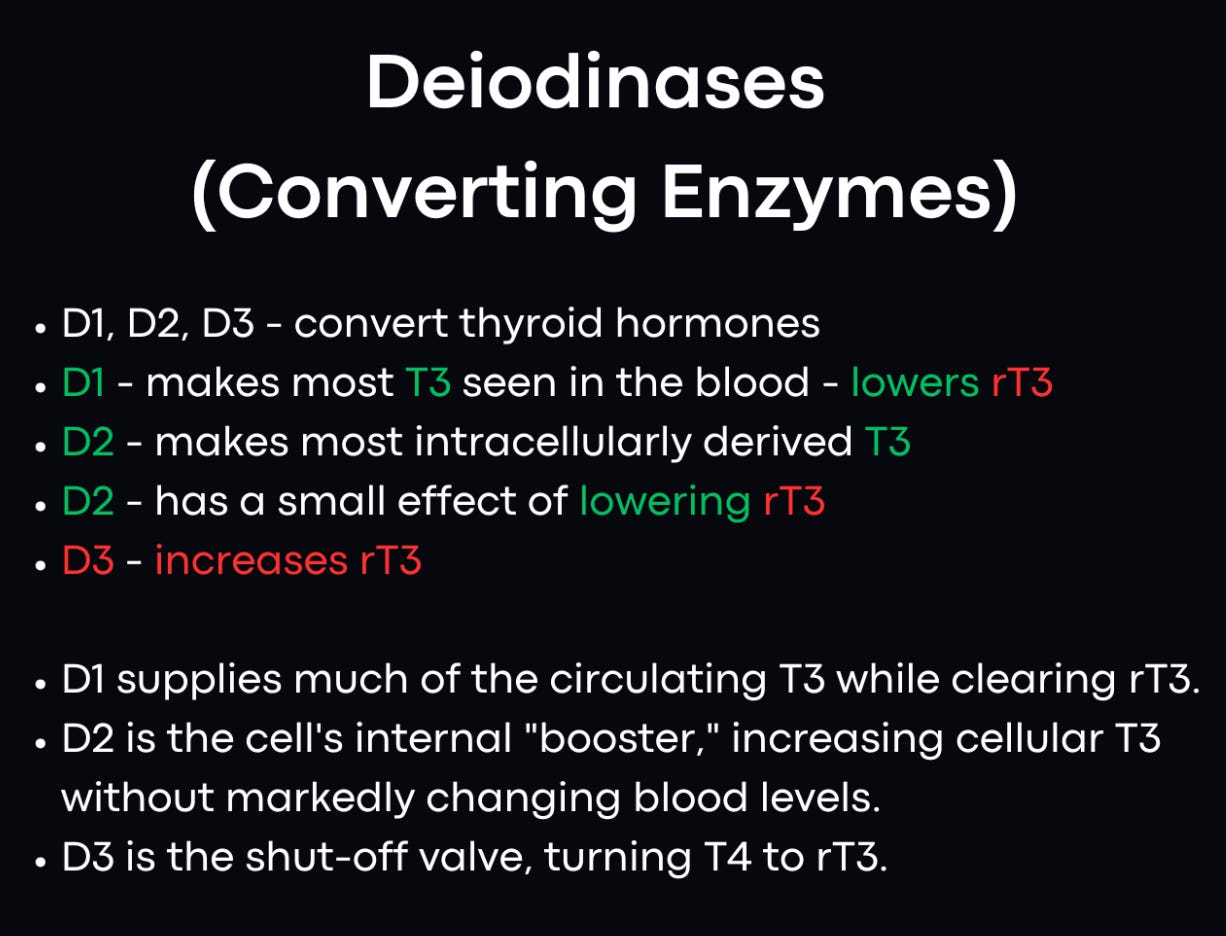
The thyroid releases mostly T4.
T4 is converted to active T3 in organs such as the liver and kidneys.
This T3 shows up in the blood as it is transported elsewhere.
However, a significant portion of our T3 is produced from T4 within cells, which is invisible to blood tests.
Reverse T3 - Wasting T4
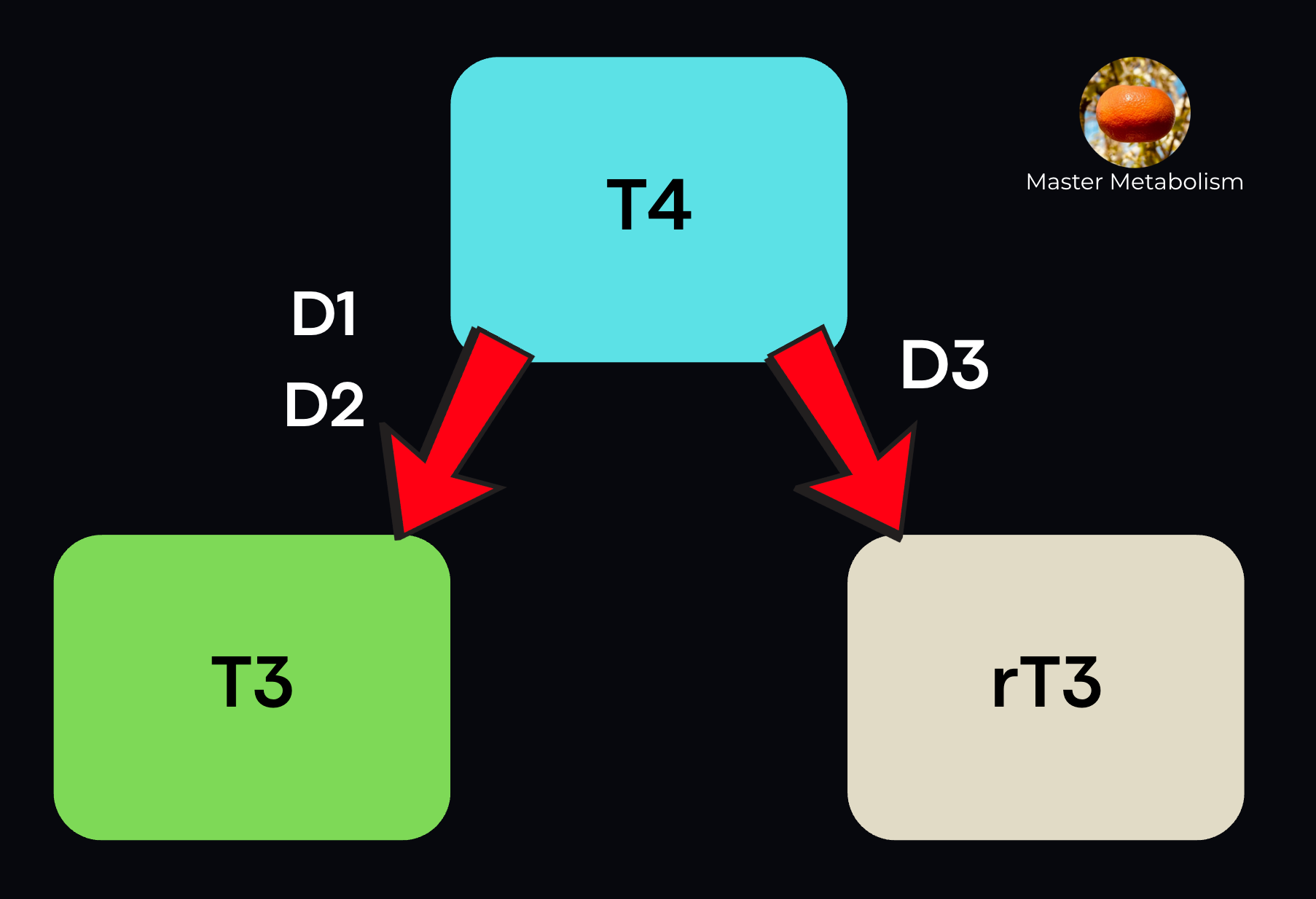
T4 can also be converted to reverse T3 (rT3).
rT3 is metabolically inactive
Increased rT3 often means less T3 is produced from T4 - that is its significance.
Higher rT3/lower T3 is triggered by "stress" - leading to hidden, cellular hypothyroidism.
High rT3 may be a good indicator of intracellular conversion issues.
Nuclear Receptors
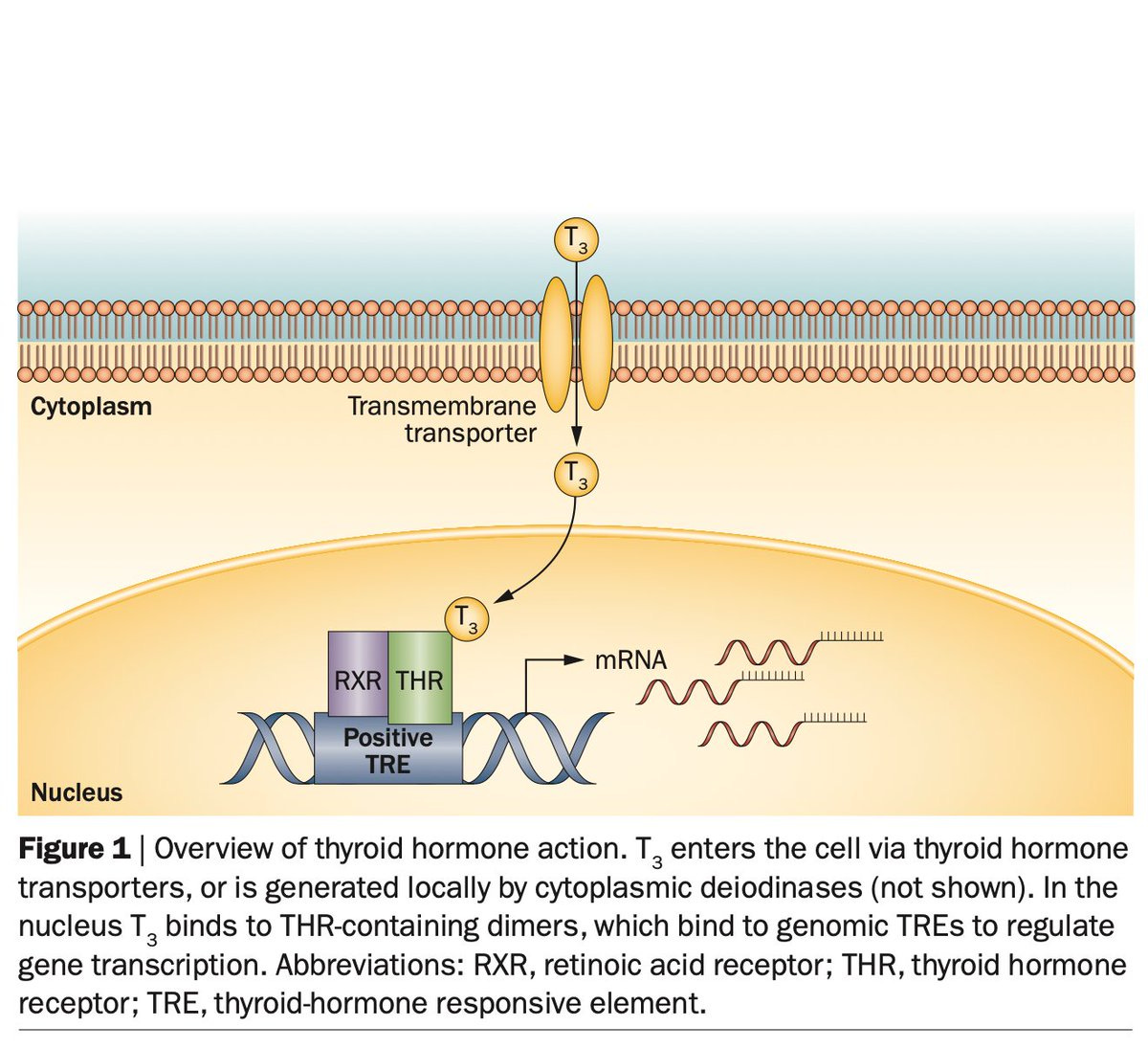
T3 must activate cell nuclear receptors.
This stimulates gene expression, metabolism, and body temperature, and has a profound impact on most biological processes.
Here, T3 can be blocked by high levels of free fatty acids/PUFAS released in response to stress, among other things.
The thyroid system must deliver T3 to the nuclear receptors.
TSH, T4, and T3 tests cannot rule out a disease caused by low thyroid hormone.
TSH, in particular, is a liar!
T4 (levothyroxine) can only work if the person is a super-converter - most aren't.
Lifestyle stress is a very common cause of low T3 activity.
Thanks for reading!
…
If you are struggling to make sense of low thyroid, my new course on hypothyroidism and low T3 is live!
Over 30 video lessons and a support community.
Launch day ➞ 50% off (24h only). (Sep15/16)
Hypothyroid course and community LINK!
Very interesting.
I recently started trying Remote Ischemic Conditioning (RIC), based upon some posts by Curious Outlier.
In 2 weeks, I've lost .8% subcutaneous fat, while my percentage of muscle and water weight have increased.
Earlier this year I tracked waking body temperature daily for about 4 months. It started around in the low 60s, and I eventually got it consistently up to 97.0 F. I checked today for the first time in months, and it was 97.8 F.
So, I've got my fingers crossed that in 2 weeks RIC has unlocked my fat metabolism and restored my thyroid function.
What is RIC? The basic version, if you have decent blood pressure:
Slap a BP cuff on an arm or leg.
Crank it up to 200 mmHg, and keep an eye on it, pumping it up if it drops below that,
Do that for 5 minutes.
Deflate and wait five minutes.
Repeat for a total of five times.
My wife and I do it while watching Jeopardy!
In addition to the above benefits, my energy levels (I'm 69) are through the roof, and my cognition is greatly improved.
All with no change in diet or exercise.
Is there an over the counter solution for T3 that is reliable? I see a lot of stuff from Forefront but don't know if I can trust them or not.